Generic Medicine Pharma

Midoria Injection (Methylergometrine) 0.2mg
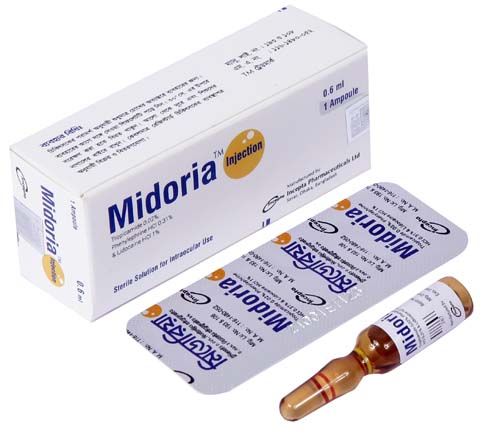
Midoria Injection (Methylergometrine) 0.2mg
Midoria Injection 0.2mg contains Methylergometrine, a uterotonic medicine used to prevent and control postpartum hemorrhage. It works by stimulating uterine contractions and reducing blood loss after childbirth.
| Field | Details |
|---|---|
| Original Brand | Methergine |
| Generic Brand | Midoria Injection 0.2 |
| Generic Name | Methylergometrine 0.2mg |
| Pack Size | Injection Ampoule |
| Use / Indications | Postpartum Hemorrhage, Uterine Atony |
| Manufacturer | Incepta Pharmaceuticals Ltd. |
| Status | Prescription Only Medicine |
Introduction to Methergine (Methylergometrine) 0.2mg
Methergine (Methylergometrine) 0.2mg is a uterotonic medicine used to prevent and control excessive bleeding after childbirth (postpartum hemorrhage). It works by stimulating uterine contractions, helping the uterus return to its normal size and reducing blood loss.
Methergine (Methylergometrine) 0.2mg belongs to the categories of Obstetric Medicines, Uterotonic Agents, and Postpartum Care Drugs. It contains Methylergometrine, which acts directly on the smooth muscles of the uterus to produce sustained contractions.
In Bangladesh, Midoria Injection 0.2mg is available as a generic brand containing Methylergometrine, offering similar therapeutic benefits when administered by a qualified healthcare professional.
What Is Methergine (Methylergometrine)?
Methergine is the original brand name for Methylergometrine, a medicine commonly used in obstetrics to manage uterine bleeding after delivery.
Methylergometrine belongs to a class of drugs known as ergot alkaloids, which stimulate uterine muscle contraction.
Generic versions such as Midoria Injection 0.2mg contain the same active ingredient and are used based on clinical need and availability.
Drug Class and Mechanism of Action
Methylergometrine is classified as a uterotonic and ergot alkaloid with strong vasoconstrictive properties.
How Methergine (Methylergometrine) 0.2mg Works
It works through the following mechanisms:
- Stimulates uterine smooth muscle contraction
- Increases tone and strength of uterine contractions
- Reduces uterine bleeding after childbirth
- Causes vasoconstriction to limit blood loss
These actions help effectively control postpartum hemorrhage.
How Methergine (Methylergometrine) 0.2mg Works in the Body
Methergine acts quickly to contract the uterus and prevent excessive bleeding.
Key Actions of Methylergometrine
- Promotes rapid uterine contraction
- Helps uterus shrink back to normal size
- Reduces postpartum blood loss
- Supports recovery after delivery
Generic versions like Midoria Injection provide similar effects when administered properly.
Medical Uses of Methergine (Methylergometrine) 0.2mg
Postpartum Hemorrhage
Methergine is primarily used to control bleeding after childbirth.
Benefits
- Prevents excessive blood loss
- Promotes uterine contraction
- Reduces risk of complications
Post-Delivery Uterine Atony Methergine (Methylergometrine) 0.2mg
Used when the uterus fails to contract properly after delivery.
Benefits
- Restores uterine tone
- Prevents hemorrhage
- Supports faster recovery
Who Can Take Methergine (Methylergometrine) 0.2mg?
Eligibility Criteria
This medicine may be given to:
- Women after childbirth
- Patients at risk of postpartum bleeding
- Cases requiring uterine contraction support
Who Should Avoid Methergine (Methylergometrine) 0.2mg
This medicine should NOT be used by:
- Pregnant women before delivery
- Patients with high blood pressure
- Individuals with heart disease
- Patients allergic to ergot alkaloids
Methergine (Methylergometrine) 0.2mg Dosage and Administration
Standard Dosage Guidelines
- Usually administered by injection (IM/IV)
- Dose determined by healthcare professional
- Given immediately after childbirth
- Should only be used in medical settings
Dosage Adjustments (Dose may vary depending on:
- Patient condition
- Severity of bleeding
- Medical history
Side Effects of Methergine (Methylergometrine) 0.2mg
Common Side Effects
- Nausea
- Vomiting
- Headache
- Abdominal pain
Serious Side Effects
- High blood pressure
- Chest pain
- Severe vasoconstriction
- Allergic reactions
Immediate medical attention is required if serious symptoms occur.
Storage:
Store below 25°C, protect from light and moisture. Keep out of reach of children.
Frequently Asked Questions (FAQs)
1. What is Midoria Injection 0.2mg used for?
It is used to prevent and control bleeding after childbirth.
2. Is it safe during pregnancy?
No, it should only be used after delivery.
3. How is it administered?
It is given by injection in a clinical setting.
4. Can it be used at home?
No, it must be administered by healthcare professionals.
5. Is it fast-acting?
Yes, it works quickly to control bleeding.
6. Is Midoria same as Methergine?
Yes, both contain Methylergometrine.
7. Is prescription required?
Yes, it is strictly prescription-only.
Medical Disclaimer
Disclaimer:
This content is for informational purposes only and should not replace professional medical advice. Always consult a qualified healthcare provider before using Methylergometrine.
