Generic Medicine Pharma

Gynomix (Metronidazole, Miconazole Nitrate & Neomycin Sulfate)
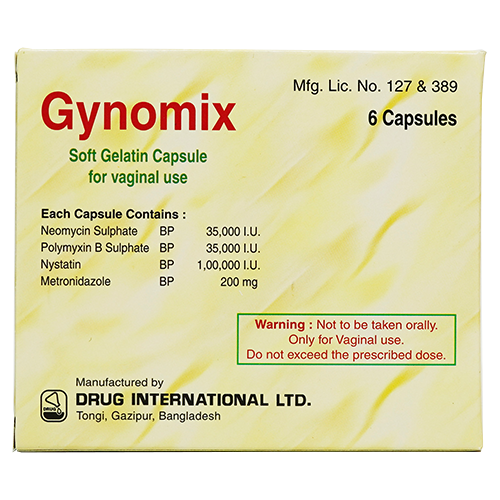
Gynomix (Metronidazole, Miconazole Nitrate & Neomycin Sulfate)
Gynomix contains Metronidazole, Miconazole Nitrate, and Neomycin Sulfate, a combination used to treat mixed vaginal infections caused by bacteria and fungi. It helps relieve discharge, itching, and irritation while restoring vaginal health.
| Field | Details |
|---|---|
| Original Brand | Neo-Penotran |
| Generic Brand | Gynomix |
| Generic Name | Metronidazole, Miconazole Nitrate & Neomycin Sulfate |
| Pack Size | Vaginal Tablets / Cream Pack |
| Use / Indications | Bacterial vaginosis, fungal infections, mixed vaginal infections |
| Manufacturer | Incepta Pharmaceuticals Ltd. (Bangladesh) |
| Status | Prescription Only Medicine |
Categories:
Gynecology & Women’s Health Medicines, Topical Medicines
Introduction to Neo-Penotran Vaginal Tablet
Neo-Penotran Vaginal Tablet is a combination vaginal or topical medicine used to treat mixed infections caused by bacteria, fungi, and certain parasites. It is commonly prescribed for gynecological infections where multiple types of organisms are involved.
Gynomix is classified under Prescription Medicines, Gynecology Medicines, Antibacterial Drugs, Antifungal Drugs, and Combination Anti-infective Therapies. It contains three active ingredients that work together to eliminate infection and relieve symptoms like discharge, itching, and irritation.
In many markets, original combination brands like Neo-Penotran are available, while local brands such as Gynomix provide similar therapeutic effects when prescribed by a healthcare professional.
What Is Neo-Penotran (Combination Therapy)?
Neo-Penotran is a well-known combination medicine containing Metronidazole and Miconazole (and in some formulations additional antibacterial agents), used for vaginal infections.
- Metronidazole: Treats bacterial vaginosis and anaerobic infections
- Miconazole Nitrate: Treats fungal infections like Candida
- Neomycin Sulfate: Broad-spectrum antibiotic for bacterial infection
Generic versions like Gynomix contain similar ingredients and are used based on physician recommendation.
Drug Class and Mechanism of Action
This combination belongs to antibacterial, antifungal, and antiprotozoal therapy classes.
How Gynomix Works
It works in several ways:
- Metronidazole kills anaerobic bacteria and protozoa
- Miconazole disrupts fungal cell membranes
- Neomycin inhibits bacterial protein synthesis
Together, they treat mixed vaginal infections effectively.
How Neo-Penotran Works in the Body
When applied locally, the medicine acts directly at the infection site, providing fast relief from symptoms.
Key Actions of the Combination
- Eliminates bacterial and fungal pathogens
- Reduces inflammation and discharge
- Restores normal vaginal microbial balance
Local brands like Gynomix provide similar multi-target infection control.
Medical Uses of Neo-Penotran
Gynomix is used for treating mixed vaginal infections.
Bacterial Vaginosis
- Vaginal discharge with odor
- Anaerobic bacterial infection
Potential Benefits
- Reduces foul-smelling discharge
- Clears bacterial infection
- Restores vaginal balance
Vaginal Fungal Infections
- Candida infection (yeast infection)
Treatment Benefits
- Relieves itching and irritation
- Eliminates fungal overgrowth
- Improves comfort
Mixed Vaginal Infections
Used when both bacteria and fungi are present.
Benefits
- Broad-spectrum infection control
- Fast symptom relief
- Prevents recurrence
Who Can Take Gynomix?
Eligibility Criteria
Patients may use Gynomix if they:
- Have confirmed vaginal infection
- Experience discharge, itching, or odor
- Are prescribed combination therapy by a gynecologist
Who Should Avoid Neo-Penotran
Gynomix should NOT be used by:
- Patients allergic to Metronidazole, Miconazole, or Neomycin
- Pregnant women (unless specifically prescribed)
- Patients with severe liver disease (metronidazole caution)
Gynomix Dosage and Administration
Standard Dosage Guidelines
- Usually one vaginal application (tablet/cream) once or twice daily
- Duration typically 5–7 days (as prescribed)
- Use preferably at bedtime for better absorption
Dosage Adjustments
Doctors may adjust treatment based on:
- Severity of infection
- Type of organism involved
- Patient response
Side Effects of Gynomix
Common Side Effects
- Mild vaginal irritation
- Burning sensation
- Discomfort during application
Serious Side Effects
- Severe allergic reactions
- Persistent irritation or swelling
- Neurological symptoms (rare with metronidazole)
Consult a doctor if symptoms worsen.
Storage:
Store below 25°C in a dry place. Protect from moisture and keep out of reach of children.
Frequently Asked Questions (FAQs)
1. Is Gynomix an antibiotic?
It contains antibiotics and antifungal agents combined.
2. Can Gynomix treat yeast infection?
Yes, due to Miconazole content.
3. Can I use Gynomix during pregnancy?
Only if prescribed by a doctor.
4. How fast does Gynomix work?
Symptoms may improve within a few days.
5. Can I stop treatment early?
No, completing the full course is important.
6. Is Gynomix the same as Neo-Penotran?
Yes, they contain similar active ingredients.
7. Do I need a prescription?
Yes, it is a prescription-only medicine.
Medical Disclaimer
Disclaimer:
This content is for informational purposes only and should not be considered medical advice. Always consult a qualified healthcare professional before using any medication.
