Generic Medicine Pharma

Acos 250
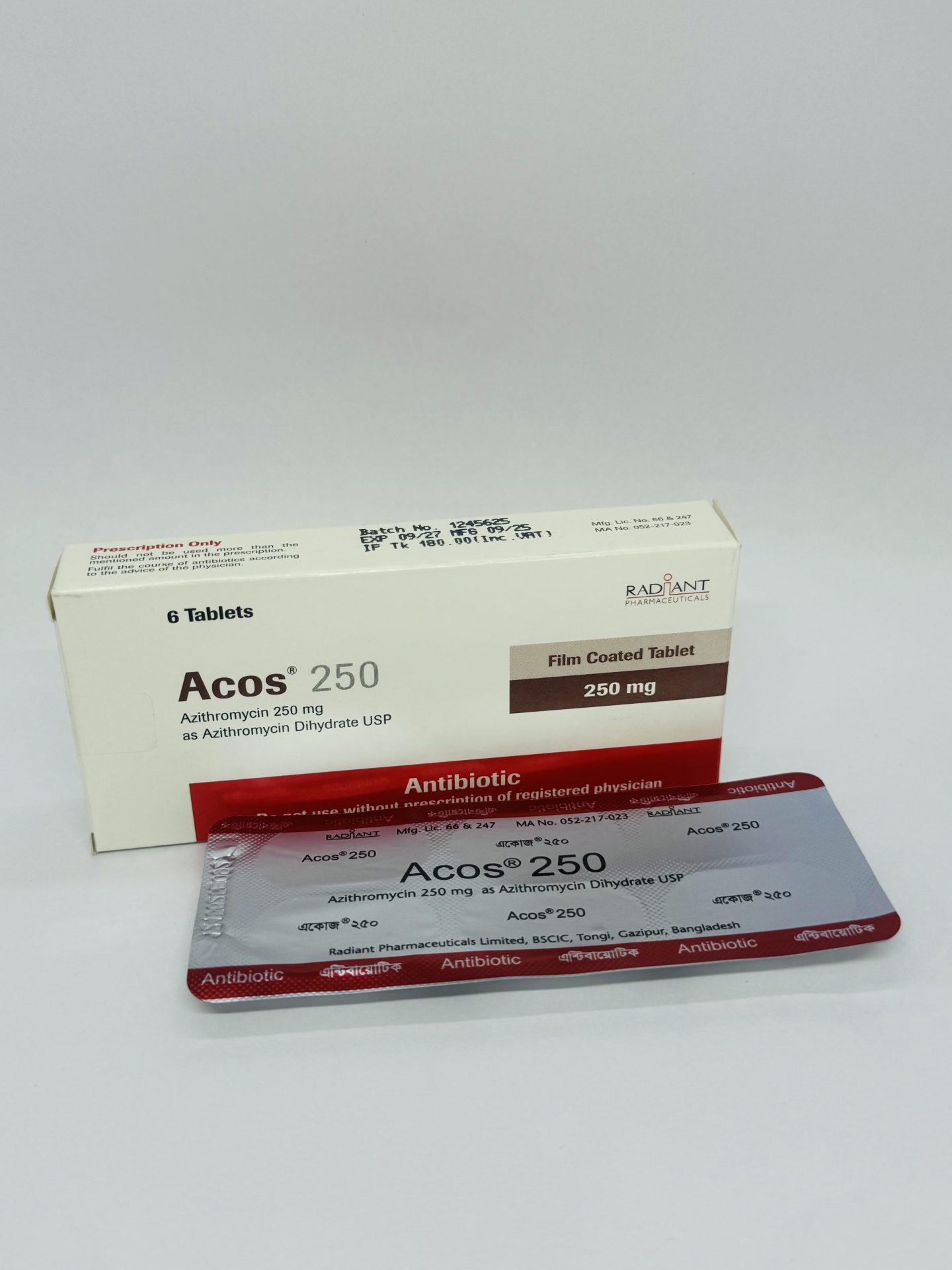
Acos® 250 mg (Azithromycin): Complete Guide to Uses, Dosage, Benefits, Side Effects & FAQs
Introduction to Acos® 250 mg
Acos® 250 mg is a versatile and widely used prescription antibiotic. Categorized under Prescription Medicines, Antibiotics, and Macrolides, it contains the generic name Azithromycin. Known for its long-lasting effect and short treatment courses, Acos® 250 mg is a “smart” antibiotic that travels directly to the site of infection by riding inside your own white blood cells. Think of the generic name Azithromycin as a precision strike against bacteria—it doesn’t just float in the blood; it concentrates in the infected tissues to stop the bacteria from growing.
Drug Class and Mechanism of Action
Acos® 250 mg belongs to the class of medicines known as macrolide antibiotics (specifically an azalide). The generic name Azithromycin functions through a specific molecular pathway:
-
It targets the 50S ribosomal subunit of susceptible bacteria.
-
By binding to this part of the cell, it prevents the bacteria from synthesizing essential proteins.
-
Without these proteins, the bacteria cannot grow, replicate, or repair themselves.
-
This targeted action provides a bacteriostatic effect, meaning it stops the bacteria in their tracks, allowing your body’s immune system to finish them off and clear the infection.
Medical Uses of Acos® 250 mg
Acos® 250 mg is approved for various bacterial infections, providing a path toward rapid recovery.
-
Respiratory Tract Infections: Treats conditions like acute bronchitis, pneumonia, sinusitis, and tonsillitis/pharyngitis (sore throat).
-
Ear Infections: Effectively manages acute otitis media (middle ear infection) in children and adults.
-
Skin and Soft Tissue Infections: Used for uncomplicated skin infections and abscesses.
-
Sexually Transmitted Diseases (STDs): Frequently used to treat non-gonococcal urethritis and cervicitis caused by Chlamydia trachomatis.
-
Typhoid Fever: Sometimes prescribed for specific cases of typhoid fever when other drugs are not suitable.
Who Can Take Acos® 250 mg?
-
Eligibility Criteria: Adults and children (usually over 6 months of age, depending on weight).
-
Who Should Avoid It: Individuals with a known hypersensitivity to Azithromycin, Erythromycin, or any macrolide antibiotic.
-
Precautions: Patients with liver disease should exercise caution, as the drug is primarily processed by the liver.
-
Heart Health: Tell your doctor if you have a history of heart rhythm problems (like QT prolongation), as this medication can rarely affect the heart’s electrical activity.
Acos® 250 mg Dosage and Administration
Standard Dosage Guidelines
-
Common Adult Regimen: Often prescribed as 500 mg (two 250 mg tablets) on Day 1, followed by 250 mg (one tablet) once daily on Days 2 through 5.
-
STDs (Chlamydia): Often given as a single 1 gram (four 250 mg tablets) dose taken at once.
-
Administration: It can be taken with or without food. However, taking it with food can help reduce stomach upset if you have a sensitive stomach.
-
Antacids Warning: Do not take antacids containing aluminum or magnesium at the same time as Acos®, as they can interfere with its absorption. Wait at least 2 hours between them.
Missed Dose Instructions
If you miss a dose of the generic name Azithromycin:
-
Take it as soon as you remember.
-
If it is almost time for your next dose, skip the missed one.
-
Do not take two doses at once. Complete the full course prescribed by your doctor, even if you feel better earlier.
Benefits of Acos® 250 mg
-
High Tissue Concentration: It stays in your body for a long time, meaning a 3-to-5-day course can keep working for several days after the last pill.
-
Broad Spectrum: Effective against a wide variety of “Gram-positive” and “Gram-negative” bacteria.
-
Convenient Dosing: Usually taken only once a day, which is easier to remember than antibiotics that require 3 or 4 doses daily.
-
Acid Stable: It is not easily destroyed by stomach acid, ensuring high levels of the drug reach your system.
Side Effects of Acos® 250 mg
While generally well-tolerated, Acos® can cause some mild to moderate side effects:
-
Common Side Effects: Nausea, diarrhea, abdominal pain, vomiting, and flatulence (gas).
-
Less Common: Headache, dizziness, or a temporary skin rash.
-
Serious Side Effects: Severe diarrhea (which may be a sign of a new infection), yellowing of the skin/eyes (jaundice), or severe allergic reactions.
-
Immediate Care: Seek medical help if you experience a fast/irregular heartbeat, severe dizziness, or fainting.
Frequently Asked Questions (FAQs)
-
Is Acos® a painkiller? No. Acos® 250 mg is an antibiotic; it kills bacteria but does not directly treat pain (though pain will decrease as the infection heals).
-
Will it treat the common cold or flu? No. Antibiotics only work on bacterial infections. Colds and the flu are caused by viruses.
-
Can I drink alcohol while taking Acos®? While there is no direct interaction that makes it dangerous, alcohol can dehydrate you and make side effects like dizziness or stomach upset worse.
Conclusion Acos® 250 mg (Azithromycin) is a targeted therapy designed to control and eliminate bacterial populations. By addressing protein synthesis at its source, the generic name Azithromycin helps reduce symptoms and enhance the speed of recovery for various infections.
