Generic Medicine Pharma

Trombola Eltrombopag 25 mg
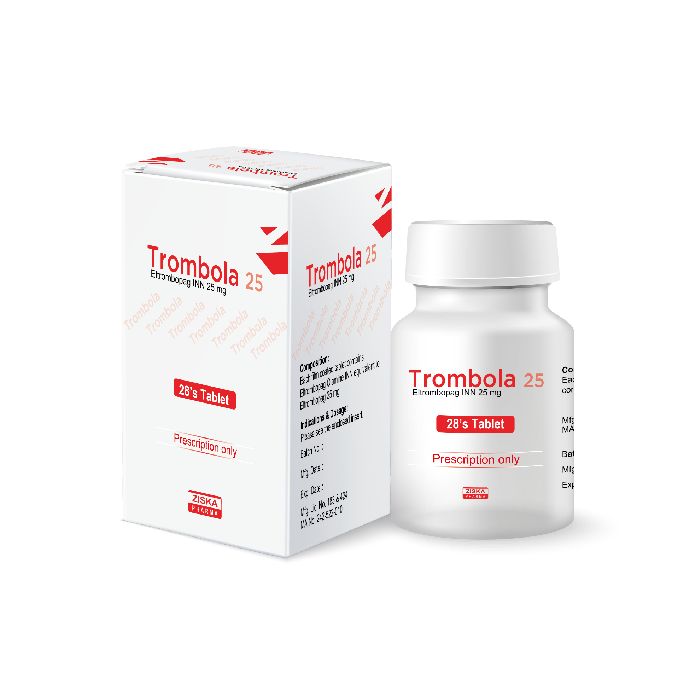
Trombola Eltrombopag 25 mg
Trombola 25 contains Eltrombopag 25 mg, a thrombopoietin receptor agonist used to increase platelet counts in patients with chronic immune thrombocytopenia (ITP), hepatitis C-associated thrombocytopenia, and severe aplastic anemia. It helps reduce bleeding risk by stimulating platelet production in the bone marrow.
| Field | Details |
|---|---|
| Product | Trombola 25 |
| Generic | Eltrombopag 25 mg |
| Pack Size | 28 Tablets |
| Use | Chronic ITP & Low Platelet Count |
| Manufacturer | Ziska Pharma (Produced in Bangladesh) |
| Status | Prescription Only |
Category:
Prescription Medicines
0.00$
Trombola 25 (Eltrombopag 25 mg): Complete Guide to Uses, Dosage, Benefits, Side Effects & FAQs
Introduction to Trombola 25
Trombola 25 is a prescription medication used to increase platelet levels in patients with blood disorders. It belongs to the Prescription Medicines, Hematology, and Platelet-Stimulating Agents categories. The active ingredient, Eltrombopag, is a modern therapy for conditions where the body either doesn’t make enough platelets or destroys them too quickly.
Think of Trombola 25 as a “bone marrow coach.” It sends a signal to your bone marrow to work harder at producing platelets—the specialized cells responsible for clotting—to prevent dangerous bruising and bleeding.
What Is Trombola 25 (Eltrombopag)?
Trombola 25 contains 25 mg of Eltrombopag Olamine. It is primarily indicated for:
-
Immune Thrombocytopenia (ITP): A condition where the immune system attacks and destroys its own platelets.
-
Hepatitis C-Associated Thrombocytopenia: To raise platelet counts so that patients can safely undergo antiviral treatment.
-
Severe Aplastic Anemia: A rare, serious condition where the bone marrow stops producing enough of all types of blood cells.
Drug Class and Mechanism of Action
Trombola 25 is classified as a Thrombopoietin (TPO) Receptor Agonist.
-
Imitating Nature: It mimics the action of thrombopoietin, a natural hormone in your body that tells the bone marrow to make platelets.
-
Binding to Receptors: The drug binds to specific receptors on the surface of “megakaryocytes” (large cells in the bone marrow).
-
Stimulating Production: This binding triggers a chain reaction that causes these large cells to grow, mature, and eventually break apart into thousands of new, healthy platelets.
Key Benefits of Trombola 25 mg
-
Reduces Bleeding Risk: By elevating platelet counts, it significantly lowers the risk of internal bleeding and severe bruising.
-
Avoids Surgery: For some ITP patients, it can be an effective alternative to having the spleen removed (splenectomy).
-
Enables Viral Treatment: Allows patients with Hepatitis C to maintain the platelet levels necessary to continue life-saving antiviral medications.
-
Bone Marrow Support: Provides a vital therapeutic option for aplastic anemia when other treatments have failed.
Dosage and Administration
-
Standard Starting Dose: Often 25 mg or 50 mg once daily, but your doctor will adjust this based on your weekly blood tests.
-
The “4 & 2” Rule (Crucial): To ensure the drug is absorbed, you must take it:
-
At least 4 hours before or 2 hours after consuming dairy (milk, cheese, yogurt), antacids, or mineral supplements (calcium, iron, magnesium, zinc). These substances bind to the medicine and stop it from working.
-
-
Empty Stomach: It is best taken on an empty stomach (1 hour before or 2 hours after a meal).
-
Consistency: Take it at the same time every day.
Common Side Effects
Because it affects blood production and the liver, monitoring is essential:
-
Gastrointestinal: Nausea, diarrhea, or vomiting.
-
Neurological: Headache or dizziness.
-
Liver Changes: Increased liver enzymes (detected via blood tests).
-
General: Muscle pain, tiredness, or symptoms of a common cold.
-
Cataracts: Some patients may develop clouding of the eye lens over long-term use.
Precautions and Safety Information
-
Liver Monitoring: Your doctor must perform blood tests to check your liver function before you start and regularly during treatment.
-
Blood Clot Risk: Raising platelets too high can increase the risk of blood clots. Seek immediate help if you have sudden leg swelling, chest pain, or shortness of breath.
-
Eye Exams: Because of the risk of cataracts, regular eye exams are recommended.
-
Ethnicity Note: Patients of East or Southeast Asian ancestry may process this drug differently and often require a lower starting dose (usually 25 mg).
-
Pregnancy: It is generally not recommended during pregnancy as it may harm the fetus.
Frequently Asked Questions (FAQs)
1. Can I drink milk with Trombola 25?
No. Dairy products contain calcium which prevents the drug from being absorbed. Follow the “4 & 2” rule mentioned above.
2. How soon will my platelet count go up?
It typically takes 1 to 2 weeks of daily use to see a significant rise in platelet levels.
3. Is Trombola 25 a type of chemotherapy?
No. It is a TPO receptor agonist. It stimulates cell production rather than killing fast-growing cells like chemo does.
4. What happens if I stop taking it?
Your platelet count will likely drop back to its original low level within 1 to 2 weeks of stopping. Never stop this medication without your doctor’s supervision.
5. Can I take it with my daily multivitamin?
Only if you time it correctly. Most multivitamins contain iron or zinc, which interfere with Trombola. Take your vitamin at least 4 hours away from your dose.
Conclusion
Trombola 25 (Eltrombopag) is a sophisticated medication that provides a lifeline for those with dangerously low platelet counts. By directly stimulating the bone marrow’s production centers, it helps restore the body’s ability to clot and protect itself. When used under the close monitoring of a hematologist, Trombola 25 is a powerful tool for maintaining blood health and preventing life-threatening bleeding.
Medical Disclaimer: This content is for informational purposes only and does not replace professional medical advice. Always consult a hematologist or healthcare provider before starting or changing any blood-related medication.
